
by Gail
Like most people, I used to think research was something that happened in the background somewhere. Universities, labs, people with clipboards. Important, yes, but not necessarily something I had much to do with. Now, as an active volunteer in research, I know exactly what it is like.
I wear hearing aids, and over the years I have been invited to take part in different hearing research studies at Macquarie University. At first, I was not entirely sure what I was getting myself into. I thought it might be very formal or a bit awkward. I imagined I might have to know the right answers, or be a certain type of person. But it was nothing like that.
One of the things I have come to appreciate is that taking part in research is a choice. You are invited to participate, but you can decide whether a study is right for you. Some studies might involve hearing tests. Some might involve listening to sounds or speech through headphones. Others might ask about your experiences with hearing aids or communication in everyday life. You can pick and choose what you feel comfortable doing, and there is no pressure to say yes to everything.
Mostly, it is just me being myself – someone who wears hearing aids, knows what it is like to miss bits of conversation, and has plenty to say about the funny and frustrating parts of trying to hear in the real world.
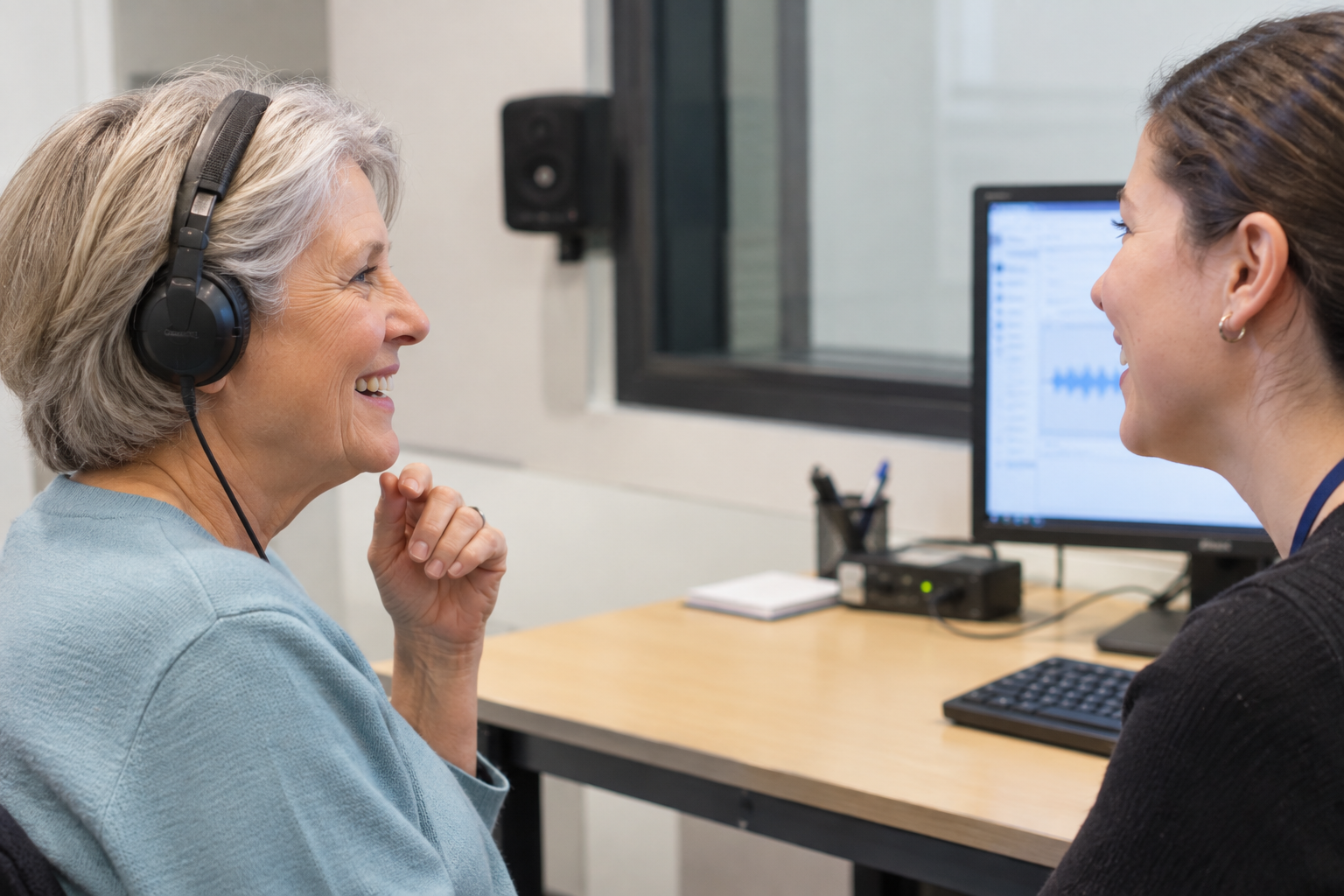
Over the years, I have been in for different assessments. Sometimes it is a standard hearing test. Sometimes I am listening to voices or sounds through headphones. Sometimes I am asked to talk about what it is like using hearing aids, or how I manage in noisy places like cafés, restaurants, family gatherings, or anywhere with a lot of people talking at once.
And let me tell you, if you wear hearing aids, you know exactly what I mean!
Lately, my friends and I have been participating in research that is part of the Australian Future Hearing Initiative, on projects about communication. These studies feel a bit different from the usual hearing tests. Instead of listening to sounds or words in noise and repeating them back, we get to sit and have conversations with each other while lots of different sensors collect information.
There is usually background noise playing too, so it sounds like we are sitting in a café, a restaurant, or a food court. It feels very realistic. Talking in noise like that is definitely harder, but that is exactly the point. It is much more like what happens in real life.
The researchers are always welcoming and explain what is happening. I never feel rushed, and I always know I can ask questions. There is usually a bit of a laugh, especially when my friends are involved. It feels relaxed, interesting, and useful.
As you get older, and especially when you have had your own experiences with health services, hearing aids, appointments and all the rest of it, you realise how much things have improved. Now I can see that some of those improvements happen because people take part in research. Someone has to test the ideas. Someone has to explain what works and what does not. Someone has to say, “That might be fine in theory, but this is what it is actually like.”
I like knowing that my small contribution might help people in the future. Maybe it will help make hearing aids better. Maybe it will help audiologists understand their clients more fully. Maybe it will help researchers design tests that are closer to real life. Maybe it will help the next generation of people with hearing loss feel more understood.
It is a small thing to give a bit of time, have a few tests, answer a few questions, or sit and chat with friends. But it feels like a way of giving back.
For anyone thinking about taking part in research, I would say give it a go. You do not have to do every study you are invited to. You can choose what suits you. You do not need to be an expert, and you do not need to have the perfect answers. Your everyday experience is what matters.
Leave a Reply